Showing posts with label humanity. Show all posts

Thursday, August 1, 2019

Hate At Schools - An Infographic

Source: ASIDE 2019
Larger PDF Image

Our students often ask us, "Why we can't end hate?" We only wish we had a definitive answer. It's not hard to discuss what we can do to help, but it's not easy when the adults constantly demonstrate the opposite. Instead of adults doing everything they can to diffuse the spread of hate through the media, they fuel the fire of hate that often leads to appalling violence. It is no wonder that since the presidential election of 2016, the rise of hate and bias in schools has increased.

special report called "Hate At School 2018" from Tolerance.org shows that schools are faced with challenges now more than ever. The study tracked hate and bias incidents for over a year; the data is a grim reminder of their pervasive rise in our schools. The incidents reported range from elementary to secondary school, both on and off campuses, and in all 50 states. Unfortunately, the news reports of these incidents is "only the tip of the iceberg."

Source: ASIDE 2019
Larger PDF Image
This infographic (Larger PDF Image) summarizes the data for the 2018 - 2019 school year reported in its monthly newsletter. The URLs listed under each month refer to the individual reports sent out by the organization. These hate and bias incidents cannot be disregarded or underestimated. We also cannot ignore the possibility that they may be just below the surface in our own schools.

Education and schools need to be vigilant about matters of inclusion. We need learners who aspire to be empathic, who understand that diversity is fundamental, and who accept that being different is a choice.

Our hope as we start the new school year is to keep these aspects in mind as we go about our routines, rituals, and traditions. 

For more information, please see:


Wednesday, July 17, 2019

When Intent Meets Agency: Reimagining A Curriculum Based on Social Justice

Source: ASIDE 2019
Inventing an entire social justice curriculum from scratch can be daunting. It turns out, most well-conceived courses already touch on issues of equity and activism. One successful approach is to make social justice a more intentional, deliberate part of student practice. A humanities framework that highlights agency, empathy, and voice can elevate “social justice” from an afterthought to the forefront of a well-crafted curriculum. Signature projects include simulations, debates, public service videos, and student-led events. Reimagining — rather than redoing — a curriculum can raise the profile of social justice as an intersection of individual identity and critical thought.

Source: ASIDE 2019


We found multiple ways to empower students to explore the issues of intersectionality in race, religion, culture, and human rights. These opportunities provided students with a place to think critically about historical situations as they related to modern-day events. Based on our experiences developing projects and lessons for a range of ages, we designed a new framework for our curriculum that has proven particularly effective, based on five metrics.

An emphasis on student voice based on choice, persuasion, and personal identity enables them to: question aspects of forced assimilation and refugee status of Native Americans; raise awareness for human rights through documentaries and public service announcements; simulate juvenile justice in a mock trial; participate in We Day volunteerism; and identify problems and solutions as social entrepreneurs. These examples and more can offer valuable ideas for educators to implement in their own schools and classrooms.

Source: ASIDE 2019

How can a social justice curriculum elevate student voice and agency by emphasizing individual participation, historical empathy, and critical judgment? What are hands-on applications of projects and lessons, across a variety of subject areas, that focus on student choice and identity? Using a new theoretical framework, how can teachers highlight existing areas of social justice practice within their current curriculum?

Source: ASIDE 2019

Social Justice

Human Rights

Migration, Refugees, Immigration
Reimagining Migration
Refugee Project
Book Series - Leaving My Homeland: A Refugees Journey From...

Student Videos
PSA Human Rights Defenders
Social Entrepreneur Enterprises
Human Rights Documentaries
Everyone Has Rights

Sunday, July 14, 2019

Social Justice With Young Learners: Using The Read Aloud To Promote Empathy

Source: ASIDE 2019

Tackling social justice with young learners is more important now than ever before; it is also a lot easier to bring into the classroom than educators might think. So many picture books published in the last few years addressing empathy issues make integrating social justice into the learning process less complicated. When we read books with children, it offers an opportunity to use the character as a vehicle to identify negative feelings or to wrestle with different points of view. It creates a safer space for deeper conversations, debates, and switching viewpoints after hearing the pros and cons for both sides. We also find that young minds can definitely handle more courageous conversations. In their innocence, they often raise issues or point out problems more easily than adults.

Source: ASIDE 2019
Children have a natural ability to feel empathy and compassion. For that reason, we decided to begin introducing ethics to our Kindergarten students through storytelling. We chose the book, “Hey, Little Ant” by Phillip and Hannah Hoose. It was a prefect tale to spur a dialog with small children about philosophical questions, such as “How does this story relate to respect” or “Who is worthy of that respect?” It provides opportunities to discuss giving and denying respect for others, as well as power and responsibility.

Source: ASIDE 2019
The story begins with a boy poised to squish an ant under his shoe, but the ant pleads with the boy to spare his life. The students were asked to think about others and whether everyone deserves respect no matter how different they are, as well as whether others should have rights when they are different. While this seems like a tall order for Kindergarteners, they actually had a lot to say, and they thoughtfully engaged in conversations to argue their points of view. Librarian Stephanie Temple made a chart of the reasons the boy gives for squishing the ant and the reasons the ant gives for not being squished. As young as these students were, they debated whether these reasons were valid.

Source: ASIDE 2019
The students were asked to consider, “Is the ant merely stealing food, or is it trying to feed and care for his family, just like humans?” With this in mind, they collaged self-portraits of their faces with their thought bubble opinions and tiny beaded ants. The head from the nose up was meant to emphasize the difference in size. Most were compassionate toward the ant after hearing all the reasons for survival. The point was not to convince them one way or another, but more to make them think about all sides before making a decision.

This story opened up opportunities to discuss giving and denying respect based on power and responsibility. We wanted students to stop and think before deciding. That was the most important lesson.

For an excellent resource see: Social Justice Books, a project from Teaching For Change: Building Social Justice Starting In The Classroom.

Monday, March 4, 2019

Black History Month: Words For A Just World

Source: Student - ASIDE 2019
It seems this year we've gravitated toward the power of words. Our main bulletin board for the middle school is all about how words change worlds. We remembered seeing a bulletin board project using quotations on social media several years ago celebrating Black History Month; so we decided to follow our "word" theme to create a display entitled "Words For A Just World."

Source: Student - ASIDE 2019
Our students chose inspirational quotations to represent a cross-section of individuals whose wisdom honors the spirit of Black Americans. Many are by individuals from the Harlem Renaissance in the 1920s, when there was an artistic and cultural explosion among African Americans. Other quotations are by those who struggled for freedom and civil rights.

Source: Student - ASIDE 2019
In their process of reflection, the students selected the passage that resonated with them and created their individual works by hand using only black, silver and gold. This personal approach allowed them to connect the heart and mind by carefully thinking about the words. Each one demonstrates an individual touch in bringing the quotation to life in a personalized way.

Source: Student - ASIDE 2019
They made a powerful statement as they were exhibited together side-by-side. Our hope was to draw viewers into a quiet contemplation of these words or to provoke them into a conversation about what they mean.

Source: Student - ASIDE 2019

Building a just world can start with just words!

Tuesday, February 12, 2019

Student Hope Sculptures: The Analog Version

Source: 6th Grade Students, ASIDE 2019

In our last post, we wrote about using the "Building Hopes" website, or app, to create "Hope Sculptures." While we realize the value of technology, sometimes the simple act of looking, drawing, and coloring by hand is just as effective.

Source: 6th Grade Student, ASIDE 2019
Our students in their leadership class used their Chromebooks to view the web version, in order to select the topics that were most important to them. They used social media to share them with others, but then they also constructed these hand-drawn sculptures to display in the library.

Source: 6th Grader, ASIDE 2019
Their drawings received a lot of attention from other students who wanted to know more about the designs, and so we thought we would share their visual creations with our followers.

It was touching to see how this exhibit led to lots of students thinking about hopeful things that were important to them, as well as wanting to know how to build their own sculptures to share.


Source: 6th Grader, ASIDE 2019
We were delighted to assist the students in this activity, and we posted the website on their student portal. They went straight to work, carefully selecting their choices to design their own personal, hope sculptures.

Source: 6th Grader, ASIDE 2019
Of course, we had plenty of colored pencils and paper around for them, too.

Tuesday, January 1, 2019

Building Hope Wth Art, AR And Data - Get Students To Visualize Their Hopes For 2019

Source: Accurat

With so much turmoil this year across the political spectrum, with the upheaval in the economy, and with the constant headlines asking the question, "Why is there so much hate in society?," we found it hard at times to keep a positive attitude and neutral position in our classrooms. It's also no wonder that according to Google search trends for 2018, the world searched for "good" more than ever before; people needed something positive.


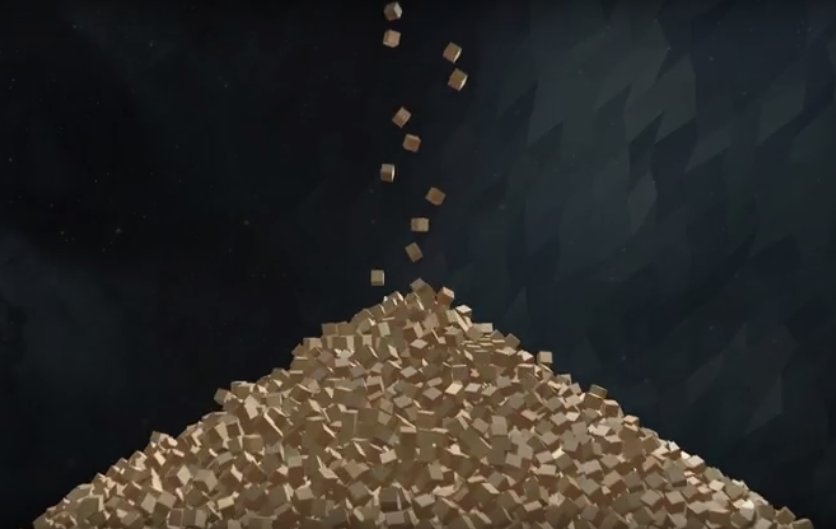
We did, too. We're sure that's why the "Building Hopes" visualization designed by Accurat caught our eye. It appeared on a list for top visualizations for 2018. This interactive visualizations lets users create "Hope Sculptures" by balancing rocks to represent the things that they are hopeful for. Ironically, the size and rotation of the rocks, including their direction and speed, are linked to Google Trends data on the topics that are chosen.

Source: Building Hopes
While the website lets you build "Hope Sculptures,” such as the images in this post, the mobile app, which can be downloaded from the App Store or Google Play, takes it to another level.

By walking closer toward the floating rocks, the topics appear for selection. The user needs to pick at least four in order to build and place his or her "Hope Sculpture." It can be placed down anywhere, such as the image at the beginning of this post.

There are ten different topics to choose from, and each rock can be weighted depending on how much hope there is for each one. They can be viewed by hopes or by topics, but what makes it even more interactive is how your hopes can be compared to others who participate in the project.

Once the sculpture is created, it can be used to access Google Trends data to see how people around the world are searching the same ideas, concepts, and movements. The size, rotation, direction and speed of the rocks represent different data trends.

Source: Building Hopes
We think letting students create their own hopes for 2019 would be an excellent way to begin the new year in our classrooms. Students can use this information to discover what others are hopeful for, and how passionately.

It provides an opportunity to think about what's important and to share ideas in an innovative way. It could be incorporated into classroom discussions or written reflections.

Hope is what we need for the future; it brings out the good in all of us.


Sunday, November 19, 2017

Student Activism, Volunteerism, And Social Engagement - Empowering Gen WE

ASIDE 2017
Rarely does a moment emerge that highlights the enormous contributions to global activism that young people make every day. The WE Day UN celebration on Wednesday, September 20, 2017, was perhaps that moment.

Rarely does a genuine opportunity emerge that promotes engagement and social justice on both micro and macro scales. The WE Movement as a whole may very well be that platform.

And rarely does an organization emerge that dedicates itself to collective movements of change. We were honored this fall to be selected to attend WE Day UN with our seventh graders.

Source: WE Day

WE Movement started over twenty years ago by brothers Craig and Marc Kielburger with the express intent to take action and make the world a better place. It includes the WE Charity, ME to WE Social Enterprise, WE Schools, and WE Day.

The WE Schools program offers classroom resources, lesson ideas, practical videos, educator packs, and step-by-step plans for leading global change. The four step program challenges students to investigate and learn, create an action plan, take action, and report and celebrate. Issues of social justice and human rights are all tackled in the spirit of young people making a difference, and it provides the tools to take action.

Source: WE Schools

The WE Day gathering is perhaps the culmination of these efforts. At various WE Day events across the country, students and educators come together to unite their voices in a multimedia festival of speakers and performers that inspire collective movements of change.


We were fortunate enough to be invited to attend the first-annual WE Day UN congress in New York City, at Madison Square Garden. Students cannot buy tickets to WE Day; they have to be invited in recognition of their volunteerism, acts of citizen service, or hours dedicated to communal justice. Our students felt lucky to be acknowledged for their work in social entrepreneurship, public service announcements, and other local actions.

Part of the ten-year anniversary of the WE Day events, this new WE Day incarnation coincided with the United Nations General Assembly (UNGA) meetings in New York. As a result, world leaders past and present visited the Theater at Madison Square Garden to share their stories and motivate the thousands of students in the tri-state area about how to make the world a better, cleaner, and fairer place to live. Leading figures such as Canadian Prime Minister Justin Trudeau, Chelsea Clinton, former President of Ireland Mary Robison, Whoopi Goldberg, and others all shared messages of equality and change.


WE Day itself is hard to describe. It is part motivational barnburner, part TED Talk, part rock concert, part panel discussion, part global colloquy, part volunteerism jamboree, and part digital extravaganza. The speakers and guests appeared on stage in rapid fire: YouTube celebrities and Disney Channel alums who elicited shrieks from the kids, and respected authors and actors who drew applause from the adults. WE.org definitely knows how to appeal to its young audience. And to be fair, a regular parade of corporate sponsors also spoke at WE Day, to emphasize the work that responsible business partners are doing in supporting the cause and in sharing the planet.

The effect that this day had on our students was massive. They came away with an excitement to carry the movement forward, but perhaps most striking for many was the persistent commentary on the lack of rights for women and girls around the world. Their plight must be all of ours, both for women and men. It could not have been more powerfully put than when President Trudeau took the stage to emphasize we need more "HE for SHE" in the fight equal rights.


Most importantly, our students realized that WE is Everyone. Being empowered to change the world starts with them, and they don't have to wait for adults to do it.


We look forward to sustaining these themes throughout the months ahead. This event was an ideal way to jumpstart the school year, and we look forward to empowering our Gen WE students to be changemakers for the greater good.

Source: WE Day

Sunday, September 24, 2017

Visualizing The Effects Of A Nuclear War

Source: Shadow Peace
Coming off a summer of the investigation into Russia’s involvement in the election, the riots and deadly violence in Charlottesville, Virginia, and the elevated nuclear threats from North Korea, it’s hard to believe that we’ve had constant turmoil since the presidential election almost one year ago. The most dangerous of all this unrest is the nuclear threat. It’s scary to think that world leaders want to spar over this. So as we return to our classrooms with our middle schoolers, we have our hands full as educators.

This summer, Neil Halloran released his sequel to The Fallen Of World War II called Shadow Peace. This new interactive documentary combines data-visualization and cinematic storytelling to explore the driving factors of war and peace. It is a web series intended to take a data-driven look at peacekeeping efforts since WWII. Part one of Shadow Peace deals with the nuclear threat.


It is a powerful portrayal of the human cost of a nuclear war and the catastrophic impact it would have on the world population and environment. Like its counterpart on WWII, the film can be paused to explore areas in more depth. The didactic possibilities are endless, and the rewards of enlightening others toward peaceful solutions immense.


Source: Shadow Peace

We plan on showing our students this documentary, just as we watched The Fallen Of World War II. The more we can educate young people to be peacemakers, peacebuilders, and peacekeepers, the greater their vision of humanity. That is in the interest of all of us; fire and fury is not.

Related Posts Plugin for WordPress, Blogger...


Pin It