Showing posts with label media literacy. Show all posts

Friday, June 30, 2017

Social Studies, Advertising, And Persuasion: Student Travel Magazines Sell Tourism

ASIDE 2017
Over ten years ago, we heard a presentation entitled “Ban the Bird Units” by librarian and educator David V. Loertscher. Essentially, it encouraged teachers and students to get away from the mundane use of facts as reporting mechanisms. This especially holds true today in the age of Google. At the time, Loertscher used the typical biographical research report as an example of a “bird unit” in which students responded to a series of questions that followed a timeline.

The state project is another example of the typical “bird unit” in which students have to find the state motto, bird, flower, etc. Ugh! Our question is who cares? Sure, it’s good to know your state particulars, but all that can easily be found on 50States.com.

ASIDE 2017
For us, it's the “so what” or remix of research to deliver content that demonstrates a higher-order thinking process with other skills that go beyond mere facts. The state magazine covers in this post required research, creative writing, and media literacy to do just that.

The students were challenged to develop clever ways to entice readers to visit their states, including titles that used alliteration for the magazine masthead and catchy sales lines just below the masthead with one of the state’s main marketing points.

They looked at the design and layout of real travel magazines. We discussed the different techniques that advertisers used to attract attention, and we critiqued covers based on design, color, and layout to see which ones were most effective in creating visual appeal. The students also observed the conventions for writing the story taglines as ways to hint at the content inside.

ASIDE 2017
The kids had a ball bringing their states to life, and they willingly helped each other out to create clever promotional ideas. The process seamlessly integrated social studies content with media literacy skills. Their finished designs became the focal points to attract visitors to their booths at the school's annual State Fair.

As for the birds, they left the nest!

Friday, February 24, 2017

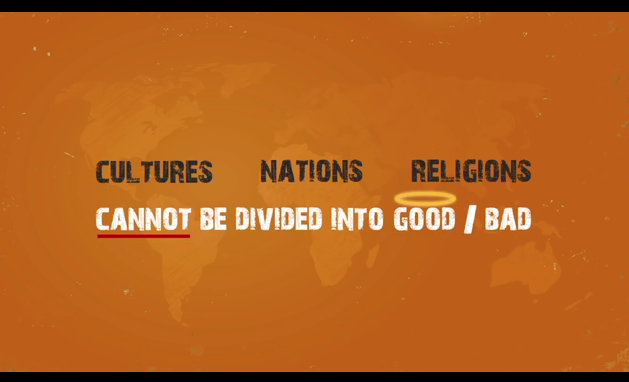
Building Common Ground Through Respect and Curiosity, Not Fear Of The Unknown

Source: Pocket Stories
Just by chance today as we looked through our resources, we came across the video entitled "Migration vs. Travelling: An Infographic Journey." It could not be timelier as we watch the growing turmoil around the country at town hall meetings and in debates about immigration searches or transgender rights.


In light of the first 30 days of a new administration, with echo chambers propelling confirmation bias on a scale not witnessed in decades, as well as a media that dwells on the hype or gingerly participates in press conferences, it’s hard to present a balanced look at issues based on facts. We also want our learners to see the human side of reality. Social media and news feeds breed biases and falsehoods that continually need to be questioned.

It’s disheartening as educators of young learners to see the strife, and it's why we continue to share as much as we can to present the facts to our learners. This video, which compares migrants and travelers, explores the stereotypes associated with each. Why is it that migrants are seen as “something negative,” whereas travelers are viewed as “something positive”? Our hope, as always, is to provide as many resources as we can to present the facts behind the issues.

Source: Pocket Stories

Media literacy is essential today. Learners need to understand how messages can influence others, as well as recognize how they can be skewed toward a particular point of view. As educators, we must show students both sides of an issue based on facts -- not alternative facts, but real facts.

Source: Pocket Stories

Wednesday, November 16, 2016

New Media Literacy Skills Empower Learners

Source: MediaOcracy

Media Literacy Week just ended a little over a week ago. It could not have come at a more opportune time for our sixth- and seventh-graders to set up their Twitter accounts and participate in the KQED Do Now challenge called “How Does Social Media Influence Our Political Values.”

As part of the challenge, the students watched the video called “MediaOcracy” from the WeTheVoters, and they tweeted their responses to the guiding questions below with the hashtag #DoNowViews.
  • Does social media help or inhibit our ability to develop our own political values?
  • Are your social media networks actually shrinking your worldview?
  • What do you do now, or what can you start doing to make sure you are seeing all sides of an issue while on social media?

MediaOcracy from We the Voters on Vimeo.

This eye-opening video made the students stop and think a good deal about how viewers could be so easily influenced through algorithms that deliver content from a single point of view, and moreover, how it often leads to a one-sided look at information. It unnerved them a little when they found out that “someone” was aggregating their search results based on likes. It also surprised many that 60% of Americans use social media to get their news.

Source: MediaOcracy

One important takeaway recommended in the video was to watch or listen to another media network that you “violently” oppose to avoid being caught up in a social media stream that feeds only what one wants to hear. With so many modern media outlets openly biased toward the right or left, it was important for these young minds to see the value in comparing information.

The media literacy program at our school has been in place for over 16 years, and it starts with the first graders. We’re fortunate, too, that our students are permitted to use social media for learning; it allows us to update our program to include new media literacy skills as part of the learning process. In an age of media bombardment, learners must be permitted to practice skills not only for today’s world, but also for their future.

The New Media Literacies video below drives this point home. In order for learners to be fully engaged with today's participatory culture, they need the social skills and cultural competencies to do it. It, therefore, must be integrated into the learning environment.


We witnessed first hand just how much it means for students to use their voices to express opinions in a world of shared content. Media is not just questioning the traditional types, such as newspapers, magazines, or websites. It’s participatory. They felt empowered to share their ideas with others and to follow what others had to say. Students need access to new media as it evolves in real time, their time, in order to be discerning learners.

Sunday, October 30, 2016

Halloween Treats To Keep Learners Focused

Source: Halloween Costumes
We work in an elementary school. So if you’re like us, Halloween always makes it difficult for kids to focus, especially with a school-wide parade at the end of the day. Our attitude toward keeping their attention is to use Halloween content to design lessons that tap the spirit of the day.

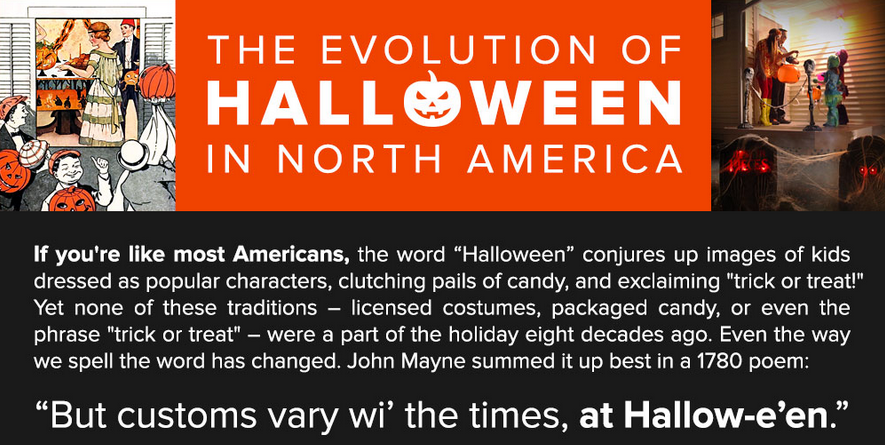
This year we found two new infographics to use with our learners. The first is The Evolution Of Halloween In North America. The timeline begins before 700 in three separate periods in history; from the 1900s to present, the timeline is arranged by decade.

Source: Halloween Costumes
The two-column layout of this infographic provides a visual connection between the history of the holiday and the literature and popular cultural aspects of the time. It’s perfect for scavenger hunts on the evolution of costumes, candy, and traditions.

Source: The Shelf
The other infographic that we thought educators would find useful is Trick Or Treat Your Way Into Halloween Sales Like A Pirate. The creator also designed "min-fographics," perfect for educators to put into any presentation software. The whimsical and colorful display to illustrate the economics behind the holiday is sure to enhance any math lesson.


The different sections of this infographic also provide ideal opportunities for data analysis of charts and graphs. They are just the right mix of visually appealing graphics with real numbers to engage students in making comparisons regarding sales, percentages, popularity, and more.

Source: The Shelf
We firmly believe a little deviation away from the routine to keep students focused pays off in the long run. Using infographics reinforces graphicacy skills, incorporates a little media literacy using Halloween hype, and celebrates learning with a little fun.

Source: The Shelf
Click here for other posts on incorporating Halloween ideas in the classroom.

Thursday, June 23, 2016

Digital Media, Human Rights, And The Writing Process

Source: Right To An Education
We teach social studies, not history. We don’t want our students to think that learning about the past has little bearing on today. It is quite the opposite. Many of the major conflicts around the world stem from deeply rooted hatred from long-ago. We chronicle events to put things in context, but we see history as part of the study of human society. Social interactions determine how people-related issues affect history, government, economics, etc., both past and present. Social studies and the humanities are inextricably linked, and we want our students to make those same connections.

Source: Freedom To Marry

One important aspect of our curriculum that we keep upfront and center is human rights. We’ve long been advocates for promoting human rights awareness in our classroom. Whether it’s talking about modern slavery or having conversations about peace, we continually try to find new ways to empower students so they can make a difference.


This year all of our fifth and sixth graders entered the elementary video competition called "Everyone Has Rights," sponsored by the Robert F. Kennedy Human Rights’ Speak Truth To Power program and the New York State United Teachers. For this contest, students needed to create a public service announcement (PSA) to address any aspect of human rights in videos that were under two minutes long. This eye-opening project made them painfully aware of just how many people around the world lack the basic rights that they take for granted every day.


The students started their research with the United Nations' Universal Declaration of Human Rights (UDHR) in a modified format that was age appropriate. They also used the Youth For Human Rights website and app to read and watch short videos about each of the 30 rights in the UDHR before beginning their own PSA.

Our students' winning video on "The Freedom To Marry," which is Article 16 of the UDHR, could not have been timelier. The announcement came the day of the terror attack in Orlando, Florida. We were extremely proud of all the work of our students, but perhaps this PSA by two fifth graders hit home in celebrating diversity and tolerance on a sad day in the United States.


The writing process played a central role in constructing the PSA, including developing a question and thesis statement to home in on a point of view before the students digitally designed their media message. This key point was essential, and it needed to be targeted. They used Google Docs to write, edit, and finalize their scripts. They chose their own topics, depending on their comfort level. The practice of making digital media helped them understand social issues. It provided a context for content. Using an adaptable and flexible framework for the creation process allowed for their voices to come through, and the end result excelled beyond our expectations.

All of the PSA videos in this post were submitted to the Everyone Has Rights competition. To see others, please click here.


We fold in current events as a routine part of teaching social studies. We don’t ask students to do a weekly “current events” report. The news matters, and we tackle questions as they arise, because middle schoolers need answers.

Friday, May 27, 2016

1st Grade Entrepreneurs Master Media And Marketing Techniques

Source: ASIDE 2016
Our Nifty Notes first grade entrepreneur project is in its fifth year, and so is our push to educate the young learners about media literacy. This collaborative project brings together their study of economics, including wants and needs, supply and demand, and scarcity and abundance, with an understanding of the art of persuasion, marketing, and hype.

Source: ASIDE 2016
This year the goal to produce 1500 Nifty Notes was ambitious, but the first graders stepped up to the challenge, because they understood that they were raising money for charity.

It was extraordinary to watch them during their library classes grasp how marketing techniques help sell products. The media influence is so pervasive that they easily adapted commercial slogans and jingles to their product. They looked at contemporary media messages and discussed how phrases such as "limited editions," "one-of-a-kind," and "handmade" help persuade consumers to buy products.

Source: ASIDE 2016


Their ideas were so electric that they started generating their own teaser advertising techniques to sell Nifty Notes. One student came up with the idea just to put images around the school of the ladybug and bumblebee, the two new designs for 2016.

A few of days later, they added hot pink notes that began with, “Wanna know what the buzz is all about?” It goes to show how when educators empowered learners, they take ownership of their ideas. It also demonstrates just how much they see in the media.

Source: ASIDE 2016
Their promotion of the Nifty Notes sale did not stop there. Another first grader designed fliers advertising, “Nifty Notes Coming Soon.” We can only imagine what this Tuesday will bring to help promote the sale.

These first grade entrepreneurs got the point, big time!

Source: ASIDE 2016

Wednesday, January 20, 2016

Powerful Visualization On Gun Violence And Why We Should Show This To Our Students

Source: Washington Post
With the continual barrage of news about gun violence in America, it's important that we use all available resources to help students give context to content, and visualizations help us do that. This motion graphic titled, 2015: A Year In Mass Shooting and produced by The Washington Post, is a powerful tool to educate young people about this issue. The headline, "374 mass shooting in 365 days in one extraordinary graphic," travels across the calendar year, pausing only once for the longest period without a shooting. As you watch, the headlines from newspapers around the country appear as the timeline progresses, but it is the voices from the 911 calls that capture the enormity of the human toll.


This motion graphic could easily be tied into any media or news literacy lesson using the headlines connected with the timeline of events. It is worth the watch with middle and high school students, and it is guaranteed to invite and spur discussions about the topic.

Friday, July 24, 2015

Designing “Anti-Logos” - Using Visual Satire To Rekindle Civics Education

Source: Bored Panda

We admit that we're fanatical about the power of logos to expand student learning. A logo packs a world of meaning into a tidy visual icon. Corporate and candidate logos combine precise elements, such as color, text, strategy, replicability, malleability, recognition, branding, and loyalty. For students, if they can unpack these multiple tiers of significance, then they can truly grasp the messages stowed within each succinct icon. This is visual and cultural literacy at its best.


Source: Lawrence Yang

In our classes, we have used logos with students to develop media literacy, to explore visual civics, and to trace Olympic history. One of the ideal uses for emblems, though, lies in visual satire. Visual satire twists familiar images to convey ironic or satirical takes on society. By warping commonplace trademarks, artists (or students) can create “anti-logos.” An anti-logo turns the intended message of an insignia on its head, using the expected visual components to springboard to a higher level of parody and meaning.

Source: Visual News
Recently, anti-logos have popped up in all sorts of places:

In lessons, teachers can invite students to create their own anti-logos. Kids can choose an established symbol and then sketch a redesign – perhaps for famous novels, historical eras, scientific discoveries, or Fortune 500 businesses. 

This activity incorporates five different rungs of higher-order thinking:
  • Understanding the essential components of a company’s, country’s, or person’s identity
  • Crafting a persuasive point of view about the topic to communicate
  • Designing a new version of the logo with a clear graphic representation and visual metaphor
  • Manipulating efficient language to tweak the original wording or intent
  • Incorporating the subtle art of satire to exaggerate or caricature the original message

Source: Fast Company, Christophe Szpajdel

Especially in the world of civics and government, a student’s ability to lampoon a candidate’s logo can provide a prime avenue for research into current events and for the development of individual political opinions.

Source: Viktor Hertz

EdSurge and Flocabulary have recently partnered, in fact, to redesign the traditional logo for a “teacher.” The familiar symbol of a bespectacled adult pointing to a blackboard seems out of date for modern, student-centered classrooms. They invite anyone to submit a new graphic via Twitter (@EdSurge) to rebrand the image of today’s educator. It reminds us of earlier efforts to rebrand education and the next generation learners.

Source: Viktor Hertz
For more ideas about teaching with logos, check out:


Sunday, March 22, 2015

The Currency Of Fairness — Why Aren't Women Allowed On The $20 Bill?

Source: Women On 20s

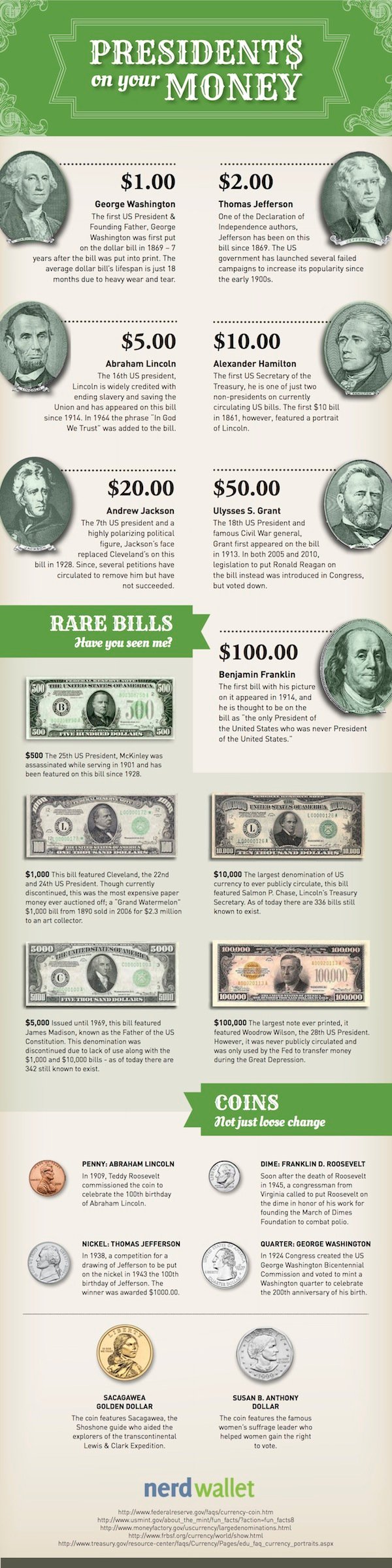
Who is on the 10 dollar bill? Who is on the 100? The 1,000? 10,000?

For the record, it's Alexander Hamilton, Benjamin Franklin, Grover Cleveland, and Salmon P. Chase. Only one of them is a president, and he's an admittedly lesser known Chief Executive.

Most Americans use coins and dollars every day, but they can't tell you whose faces occupy their notes. Most people know who's on the penny (Abraham Lincoln), but they can't name who is on the dime (Franklin D. Roosevelt).

The one thing, however, that all Americans intuitively know is that all of these etched and sketched faces are of white men. Why aren't there any women on U.S. bills?

Especially today, as the U.S. Mint is rotating images in its 50 State Quarters and its President $1 Coins, it seems inexcusable that none of the nation's women leaders are celebrated on our currency.


One group is trying to change this — and they're getting a lot of buzz. News stories this week featured the organization "Women On 20s," which is trying to replace Andrew Jackson on the 20 dollar bill with one of 15 inspiring women who championed freedom, voting, rights, medicine, and justice. Although Jackson's legacy reaches to the War Of 1812 and Big Block Of Cheese Day, he is largely remembered for leading the Trail Of Tears and the Indian Removal Act. Surely the country can honor a hero who did more to elevate the progress of the aspirational.


March is Women's History Month. The conversation around women's exclusion from patriotic displays is critical toward continuing the conversations about equality. This campaign, led by Barbara Ortiz Howard, is trying to gain enough signatures on its petition to inspire action by the White House. You can vote for the candidates and add your name to the petition at the website.

Source: Nerd Wallet (click for full version)
The spotlight on the 20 dollar bill's likeness offers a valuable opportunity to blend in other activities about financial literacy. This moment invites relevant lessons in elements of U.S. currency, including national leadership, image symbolism, Latin mottos, serial numbers, Treasury secretaries, counterfeit prevention, the U.S. Mint, and the Federal Reserve.

For other ideas about teaching financial literacy, we recommend:

Friday, March 20, 2015

Most College Athletes Are Failures — Learning From March Madness

Source: NCAA

Cheer for the stumbles
The he-shoulda-had-thats
And the tears that linger

For in those moments
Greatness lies

There you will find 
The provoked
The determined
The unified

It’s in those moments 
That champions are born

Most NCAA athletes are failures. They don't win the championship. They don't enter the pros. They don't take home a trophy at the end of the season. Only a handful of elite programs reap the acclaim and hardware that accompanies major spectacles like the men's NCAA basketball tournament. Most Division I, II, and III competitors are well-rounded college students giving a tremendous amount of effort for the love of their sport and their college.

Just watching one game of the March Madness media blitz is enough to make even a non-fan sympathetic to the kids with their heads hung low after a devastating loss. Anyone in an office pool knows that their bracket will be busted after the first weekend. There are no trophies for participation.

Yet these are the moments that turn kids into adults, that enforce life lessons of diligence and duty, grit and grace. That's why the March Madness tournament offers a great chance to talk to students about failure, about perseverance, and about process over product.

Ad agency Leo Burnett produced an award-winning TV spot for the NCAA last year called "Cheer." Since then, its aired over 850 times, and it's in heavy rotation again this week. It's easy to see why.

The ad is a brief masterpiece of narration and language to encourage everyone — athletes, kids, and adults — to relish the stumbles of life and the tears of as-yet-unmet goals. As the transcript reads, these moments turn disappointed players into "the provoked, the determined, the unified."

Source: NCAA
Teachers talk a lot about failure with their students, about the unreachable expectation of perfection and the inescapable necessity of hard work. This ad is a perfect companion for homeroom discussions, circle time, advisory conferences, or recess pick-me-ups.

For more ideas about teaching with the NCAA tournament, check out: "March Madness In The Classroom — Teaching With Tournament Graphics."

Monday, February 9, 2015

Creating Logos With Students - Understanding Visual Metaphor And Symbolic Meaning

Source: DesignMantic (click for full-size image)
Logos are short-hand, visual cues that companies use to evoke their brands. Effective logos represent automatic associations between a corporation and a customer. They connect a unique icon with an emotional reaction.

This type of tidy pictorial design can also be employed to winning effect in the classroom. Students can use logos to study visual metaphors and symbolic meanings. They can experiment with thesis and synthesis, in boiling down a range of meanings into a concise, original image.

Source: ASIDE 2015
History students, for example, can sketch logos to embody specific presidents or time periods. We had our U.S. history classes brainstorm logos for the era of the Great Depression. The designs featured in this post range from a juxtaposition of the Empire State Building going up while the stock market goes down, to a financial Dust Bowl of lost dollars.

In studying literature, learners can similarly design logos to accompany a book or a character. It's no surprise that the Hunger Games mockingjay pin became so popular among fans. Science students can draft logos for key principles or elements, or global thinkers can draw emblems to capture current events.

Source: ASIDE 2015
By translating their understanding into self-created icons, students can climb a level in their comprehension, from decoding to encoding. They can capture the essential significance or recurring tropes via clever designs that will in turn help educate their peers.

Steps for creating logos with students:
  1. Begin by having learners identify logos and brands from current media. We use these sheets of letters and symbols as games to get students excited and to introduce the range of possibilities.
  2. Invite students to rank their favorite logos and explain why some stand out in their minds. For example, we had children rate the logos of presidential candidates in 2012.
  3. Introduce some tips for contemporary design. DesignMantic has a helpful infographic of the "10 Commandments Of Logo Design." FastPrint also offers a terrific infographic about "How To Design The Perfect Logo."
  4. Ask them to brainstorm the key characters, themes, or takeaways that they would want a logo to evoke.
  5. Finally, give them a range of tools to use, from hands-on pen and paper to visual apps like Pencil by FiftyThree.
Source: FastPrint
Above all, a logo should present a clear, somewhat unexpected relationship between picture and subject. The video below, "49 Years Of Super Bowl Logos," reveals how images can evolve with the times to add layers of significance.

For further ideas, we recommend:

Sunday, February 1, 2015

Charts, Graphs, And Visual STEAM - Teaching The Super Bowl By The Numbers

Source: Asbury Park Press

Aside from the physical drama and the halftime theatrics, the Super Bowl provides prime fodder for data analytics. The enormous volume of communication and marketing around this shared cultural moment offers a case study for exploring numbers and significance.

These days, graphs are no longer the sole purview of math class. This fall, for example, we spent a “math week” in social studies talking about how historians incorporate statistics and charts in probing the details behind pivotal events. Similarly, the Super Bowl bridges academic disciplines as an appealing touchstone for students to get excited about analytical reasoning and data design. That’s how right-brained and left-brained mindsets can merge perfectly in a contemporary STEAM study.

Some examples of lessons and visual aids that use graphs and charts include:

Source: Yellowfin
On Super Bowl Sunday, 1.25 billion chicken wings are expected to be consumed. The number of tweets is predicted to top 25 million, up significantly from the 13.4 million last year. And the average American is projected to consume 2,400 calories of Super Bowl chow.

The emphasis here is on the visual presentation of numerical sets. Graphic literacy (or “graphicacy”) means that learners can “read” the grammar of lines and bars. Understanding trends and anomalies are key skills in interpreting mathematical and scientific figures.

As every educational institution searches for ways to blend STEAM proficiencies into the curriculum, the pop draw of the Super Bowl can be just the ticket to grab kids’ attentions in discovering the day’s dynamic details. Any of the tables or diagrams below would be terrific examples to show on Monday in kicking off a week of visual STEAM activities. The logical reasoning of numbers meets the illustrative narrative of the liberal arts:

Source: The New York Times

Super Bowl ads often get the most attention from both football diehards and passing revelers alike. This interactive tool from the New York Times allows students to compare a timeline of percentages as they parse the media blitz across the years.

Source: Yellowfin

The media literacy component of Super Bowl mayhem cannot be overlooked. Many avenues exist for teachers to guide students in realizing the emotional tug of advertising during this high profile event. Yellowfin has designed an easily understood graph of Super Bowl ad prices to engage any student.

Source: Yellowfin

For aficionados of the sport itself, Yellowfin has assembled a horizontal bar chart of MVP winners by position. The results are familiar enough to let the content drive the comprehension. In other words, even the youngest mathematicians can expect QBs to win awards, and thus the extended blue bar becomes a visual signifier for their predictions. 

Source: Yellowfin

For strategists of team offenses, bubble graphs can blend with traditional tables to illuminate the choices of quarterbacks in certain situations.

For other Super Bowl educational resources, we recommend these posts:

Monday, August 25, 2014

The Nifty Notes Company: 1st Grade Entrepreneurship

Source: ASIDE, 2014
We introduced the concept of teaching first graders about entrepreneurship three years ago and never looked back. This spring, our young entrepreneurs completed their third successful year building the Nifty Note Company.

This interdisciplinary project-based learning unit reaches across subjects, including media, design, branding, and economics. When these first graders go into production, printing, designing, and packaging 1000 note cards from start to point of sale, it is mind blowing.

We learned this project at a presentation at the National Council for the Social Studies annual conference from the first grade teachers at the Collegiate School in Virginia. We modified and expanded their Critter Creations unit to brand our own company called Nifty Notes. It not only easily connected with language arts, math, and social studies, but it also could be expanded to include other components such as media literacy to broaden the learning concepts.

Source: ASIDE, 2014

It opened opportunities for the students to show off their creativity as well as make decisions about what designs would be best to maintain quality and consistency. Their inventive nifty characters (above) are something to behold.

Source: ASIDE, 2014
At the start of the project, each student gets an employee manual with the history, vocabulary, and job descriptions and qualifications for production. We use a host of resources to teach them about wants and needs, supply and demand, quality over quantity, etc.

Through stories such as Little Nino’s Pizzeria by Karen Barbour, the students learn about natural, capital, and human resources. These ideas are continually threaded throughout the entire process that believe it, or not, is completed within three-to-four weeks.

The multiple layers built into this project in addition to the actual production include doing a market survey, applying for a job in the company, filling out a job application, collecting data, creating the advertising for the school community, running the store, counting money, and issuing receipts. For samples of some of our handouts for this project, click here.

Source: ASIDE, 2014
Perhaps one of the most valuable takeaways the students learn is charity. Each year the first graders make a charitable donation with a portion of the profit from the sale of the note cards to an organization of their choice.

Source: One Hen Inc.
A go-to book that's perfect for helping young children know the importance of giving is One Hen: How One Small Loan Made A Big Difference by Kate Smith Milway.

The One Hen website also provides lots of addition material and ideas for teachers, and the non-profit organization, Kiva, lists opportunities for individuals to lend small amounts of money to help others around the world.

Source:Amazon
Our library has a strong collection of resources, including books at the primary level, for teaching economics with titles such as Do I Need It or Do I Want It from the Exploring Economics series, and Lemons and Lemonade: A Book About Supply and Demand from the Money Matters series. In addition, there are some excellent children’s picture books that we use to talk about money, opportunity costs, and marketing.

Teacher collaboration makes this project work. When first graders manufacture, market, and sell a product to real customers as a class business, the experience is priceless!


Source: ASIDE, 2014

Project Materials: colored cardstock, white envelopes, cellophane bags, mailing labels, inkpads, and Sharpie markers

For more resources, please see:

Thursday, August 21, 2014

Media Literacy: War And Peace Journalism

Source: ASIDE, 2014
This summer we’ve seen unprecedented violence and conflict, from our own backyard in Ferguson, Missouri, to the Ukrainian-Russian border. We’re sure that our learners have seen it, too. Wherever the conflict is, you can rest assured the media is there in full force as well.

The sound bites, prompts, replays, jolts per minute never end. The hyped negativity abounds with each new event. The good news is relegated to filler material that is never enough to make anyone feel good for long. No wonder parents are reluctant to let their children watch the news. In some ways our media is like the Capitol of Panem in The Hunger Games spicing up the story to keep the masses engaged. In the competition for viewership, ratings matter.

So what is Peace Journalism? The principal founder of the concept is Johan Galtung. He claims that our common daily news should be classified as War Journalism, because it tends to present conflicts as endless battles, or war.  According to the Center for Global Peace Journalism, the practice of “Peace Journalism is when editors and reporters make choices that improve the prospects for peace.” These journalists carefully choose their words to create an atmosphere favorable to peace in order to make non-violent solutions more visible and viable.
Source: Center for Global Peace Journalism

Now more than ever we need to include discussions about war and peace journalism as part of media literacy instruction in our classrooms. It's important to help learners sift through messages from the media to find ways to change the view from a culture where aggression sells to one that diffuses turmoil by finding commonalities in humanity. By guiding students to seek solutions to conflicts, they become better peacemakers and peacekeepers. If we can flip classrooms, let’s get kids to flip the news to look for positive ways to present current events.

The following video was created by Oded LevRan as a project in visual communication studies at Holon Institute of Technology. It’s called Chickpeace. It presents the main principles of Peace Journalism using hummus as an analogy to reality that this is a staple dish for both Israelis and Palestinians.


chickpeace from Oded LevRan on Vimeo.

Depending on grade level, students could take a topic, event, or place and present it as a way to build common ground. Aiding students in this type of endeavor teaches them the art of framing a topic around a positive approach to the world around them. Using reframing techniques, they can take an existing report and come up with a way to down play the hostility to foster a greater understanding. As always, teaching students to deconstruct messages, call out biases, or highlight sensationalized reporting builds stronger media and news literacy skills.

For more information, please see:
Related Posts Plugin for WordPress, Blogger...


Pin It